

By A. A. Mshelia
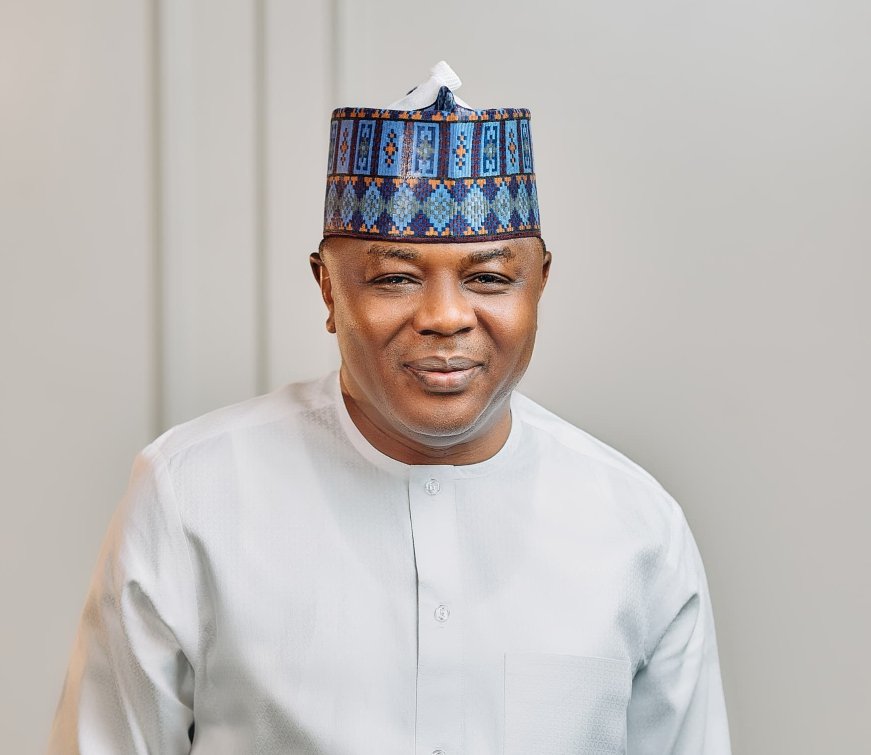
In an age where politics is loud, but leadership is faint, Rt. Hon. Muktar Betara Aliyu, OON, continues to stand as a rare figure carved by focus, discipline, and vision. His trajectory in public life has been one long testimony that a leader can be tested by arrows of envy, rivalry, propaganda and storms yet remain unshaken — not because he trades words or fights back, but because results have always spoken louder than any rebuttal.
For more than a decade in the National Assembly, Betara has built a reputation not on theatrics but on competence and delivery. As Chairman of the House Committee on Appropriations, he supervised some of the most sensitive instruments of national planning with a record that earned respect across aisles and across borders. He is not a politician who merely occupies office — he is one whose time in office leaves infrastructure, institutions, and people better than he met them.
Few leaders from Borno have commanded his degree of national and international goodwill. From the global development community to federal institutions, from his peers in parliament to the ordinary voter in his constituency, Betara is regarded as a fine politician of a rare type — firm without arrogance, strategic without noise, generous without publicity, and accomplished without scandal. Borno has produced gifted sons, but in Muktar Betara Aliyu, many argue it has never produced his type: a man simultaneously celebrated at home, honoured in Abuja, and recognised beyond Nigeria.
His record of projects is concrete, not conversational. Across his federal constituency stand roads that ease commerce, electrification projects that lit up communities long resigned to darkness, health centres that brought primary care closer to the poor, classrooms and ICT centres that rewired the future for children who otherwise would have been locked out, boreholes and water schemes that replaced decades of suffering, empowerment initiatives that lifted widows, youths and farmers to dignity rather than dependence, and intervention programmes that restored lives after conflict and displacement. These are not claims — they are visible testimonies.
Despite years of attacks — some overt, some subtle — he has remained undistracted. Betara does not defend himself by trading words. His legacy defends him. His delivery defends him. His people defend him. His survival through every political season is proof that arrows do not conquer a man whose results speak and whose conscience is anchored.
He is not just an asset to Borno; he is a strategic national asset of high repute — one whose brand of politics is development, whose strength is character, and whose legitimacy is performance. And as it has always been, so will time prove again: in 2027 and beyond, ballots will not be cast on sentiment but on the people’s instinct to protect their future, their dignity and their livelihoods. In that sober moment — when the nation chooses between noise and substance — Rt. Hon. Muktar Betara Aliyu will stand where he has always stood: on the side of the people, and with the people on his side.
